


Your zip code can tell a lot about your health. Studies show that historically redlined neighborhoods can overlap with areas that flood the most, have the worst air quality, and experience the warmest temperatures.
Our story takes us to California’s San Fernando Valley and to Newark, NJ, where immigrant families live in or near zones that have been redlined and experience health issues due to extreme heat and pollution.
Home, Interrupted is a podcast series exploring how the climate crisis affects immigrants across the U.S., and how immigrant communities are finding new ways to deal with a warming planet.

Redlining & Climate Change: A dangerous combination for immigrant communities
by Iggy Monda
When it comes to climate change resilience and vulnerability, who you are and where you live matters.
In January 2020, a study showed the hottest neighborhoods in American cities today are also the areas that have less green space and more low-income and minority residents. Conversely, neighborhoods with white, high-income communities had the lowest temperatures in cities.

This study also established a connection between these hotter neighborhoods and redlining, the prejudiced practice of marking minority neighborhoods as ineligible for mortgage loans. Specifically, redlined neighborhoods in 94 percent of 108 cities surveyed across the United States were consistently hotter than areas that were given preferential mortgages historically.
“I had a suspicion for a long time,” said Professor Vivek Shandas, one of the researchers who co-published the study. Prior to the study, Shandas had been collecting temperatures and air quality measurements in cities around the United States for the past decade. “I was seeing a consistent pattern where I was noticing the hotter places tend to be poorer, tend to [have] people of color [and] immigrant communities living in them even today.”
Ever since Shandas and his colleagues Jeremy S. Hoffman and Nicholas Pendleton published their first study, newer research has established links between redlining and flooding, redlining and dirty air, redlining and wildfires, even redlining and earthquakes.
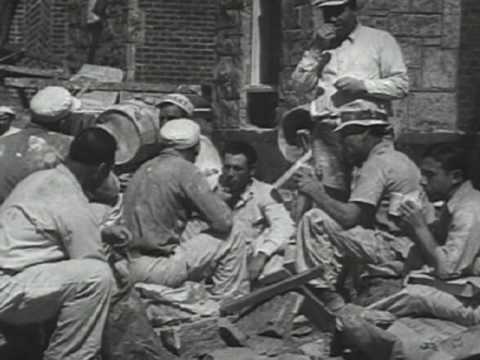
In 1934, President Franklin Delano Roosevelt signed the National Housing Act as part of his New Deal programs to support Americans during the Great Depression. The National Housing Act curtailed home foreclosures, increased access to mortgages, and brought thousands of construction jobs to unemployed workers. However, it also introduced redlining, a practice that depressed home values, lessened job opportunities, spurred poverty, and relegated minorities and low-income residents into certain neighborhoods. Housing officials would draw maps to identify which locations were “risky,” and which residents were “safe” to offer loans to. Areas that tended to have Black, brown and immigrant communities would have their neighborhoods outlined in red. Those areas were not eligible for the same government-backed mortgages other neighborhoods were.
The practice was so controversial, it was made illegal over three decades later, in 1968, with the Fair Housing Act—signed by President Lyndon B. Johnson a week following the assassination of Martin Luther King Jr.
The impact of redlining has long been associated with the Black community and for good reason. Even today, Black communities continue to face discriminatory lending practices. But researchers are increasingly recognizing the close connections between redlining and climate within immigrant communities as well.
“My concern is that immigrant communities who already have many challenges in living in a new space will need an enormous amount of capacity and support to be able to navigate some of these hotter summers, wetter winters, really kind of much more extremes of what climate change is going to bring to us,” said Shandas. According to his study, neighborhoods today that were originally redlined can get upwards of 25 degrees warmer because of a lack of tree canopy, as well as heat trapped by the asphalt and concrete found in those areas.
“Neighborhoods that were formerly redlined, you have … a lot more instances of things like asthma and high rates of cancer, maternal mortality, a lot of things related to air quality and poor environment,” added Cate Mingoya-LaFortune, the Chief Officer of Climate Resilience and Land Use at Groundwork USA, a nonprofit that supports neighborhoods in making their communities greener and more environmentally resilient. “Pretty much anything you would be disappointed by happens more frequently in those formerly redlined neighborhoods.”
Some regions that were redlined are slowly starting to change, as gentrification becomes more of a reality with the rise of housing costs and property values begin to rise. Despite the changing demographics of the residents, these neighborhoods typically do not refurbish themselves with trees, green spaces, and water-absorbent streets that reflect the sun’s heat. They tend to still be as vulnerable to the same increasing heat. According to Mingonya-LaFortune, the only difference is the more affluent residents moving in are more likely to be able to afford higher air conditioning use. This also increases the overall energy consumption and greenhouse gas emissions that contribute to climate change.
So for the immigrant communities living in climate-susceptible neighborhoods, what can be done?
Prof. Shandas partnered with the Urban Forest Equity Collective in Los Angeles to conduct workshops with local residents in low-income areas that were either historically redlined or disinvested. Those same areas also suffered from air pollution and climate-related issues like heat. The Collective asked residents where in the neighborhood they wanted to see more trees, and then shared strategies and recommendations with the city about funding and collaborating with organizations—like TreePeople—to advance urban forest equity.


Across the country, in the redlined Ironbound district of Newark, NJ, a predominantly immigrant neighborhood, the Ironbound Community Corporation (ICC) has been fighting the environmental fight for 55 years. The ICC organizes through grassroots actions and has enacted policy change. Today, that effort includes the climate crisis. ICC organizers helped establish 100 affordable housing units, cultivated a 15-acre park on the river, built a community garden, and sued big polluters.
In 2009, the ICC filed a lawsuit against Covanta, a waste management company that runs Newark’s trash incinerator, now known as Reworld. The company eventually agreed to upgrade its facility with pollution control equipment, but it continued violating pollution permit limits. From 2004 to 2021, Covanta racked up over 800 air permit violations. Residents of Newark grew accustomed to pink and purple smoke covering the sky from Covanta’s incinerator burning up pesticides and iodine.


“The people that work at these companies, they don’t live in this neighborhood,” said Maria Lopez-Nuñez, White House advisor and ICC’s Deputy Director of Organizing and Advocacy. “If they love incineration so bad, they should set one up in their neighborhood.”
Following ICC’s meetings with Covanta and state representatives, as well as a letter to the state’s Attorney General and multiple protests, New Jersey enacted environmental justice legislation in 2020. It wasn’t until 2023 that it was officially enforced, but it mandates stricter permit evaluation for companies that could pose potential public health problems through pollution.
“It’s important that those most affected are the ones speaking about it,” added Lopez-Nuñez. “Because everybody else, they don’t have the same skin in the game.”
June 2034 will mark the 100-year anniversary of the National Housing Act and the genesis of redlining – the same year scientists predict the world will surpass the 1.5°C threshold. At the time of the Paris Climate Agreement in 2015, scientists were projecting that threshold wouldn’t be hit until 2045. Even the United Nations has acknowledged that the world is behind its climate goals. In the United States, the first people affected will be disenfranchised and low-income communities of color.
“If our neighborhoods don’t look the way they do by accident, that means they’re not going to change by accident,” said Mingoya-LaFortune, “and we’re going to actually have to push to further change.”

Here are a few other examples of communities fighting to improve their formerly redlined neighborhoods for the climate future:
Denver, Colorado: Latina single mother from Commerce City shares her fight against environmental racism (Commerce City Sentinel Express)
Cape Verdean Assoc. in New Bedford announces start of Island Park construction (New Bedford Guide)
Building a salt marsh, in the city: New Bedford is reclaiming a piece of urban waterfront for nature (WGBH)
Pawtucket and Central Falls, Rhode Island: RI tree planting program helping to bring relief to hottest areas (The Providence Journal)
Richmond, California: Richmond to plant 500 pollution-shielding trees along parkway (The Richmond Standard)
Credits
Hosted and Produced by Iggy Monda
Additional Reporting by Shreya Agrawal, Quincy Surasmith, and Mia Warren
Edited by Quincy Surasmith, Mia Warren, and Virginia Lora
Fact Checking by Julie Schwietert Collazo
Engineering by Jocelyn Gonzales
Theme music by Fareed Sajan
Additional music:
I Know What You Know, by Fareed Sajan
Absent, by Martin Baekkevold
“Home, Interrupted” show logo by Daniel Robles
Feet in 2 Worlds is supported by the John D. and Catherine T. MacArthur Foundation, The Ford Foundation, the David and Katherine Moore Family Foundation, the Fernandez Pave the Way Foundation, an anonymous donor, and contributors to our annual NewsMatch campaign.
You must be logged in to post a comment.